Nautical sector calls for E10 gasoline to be available at Brazilian fuel stations
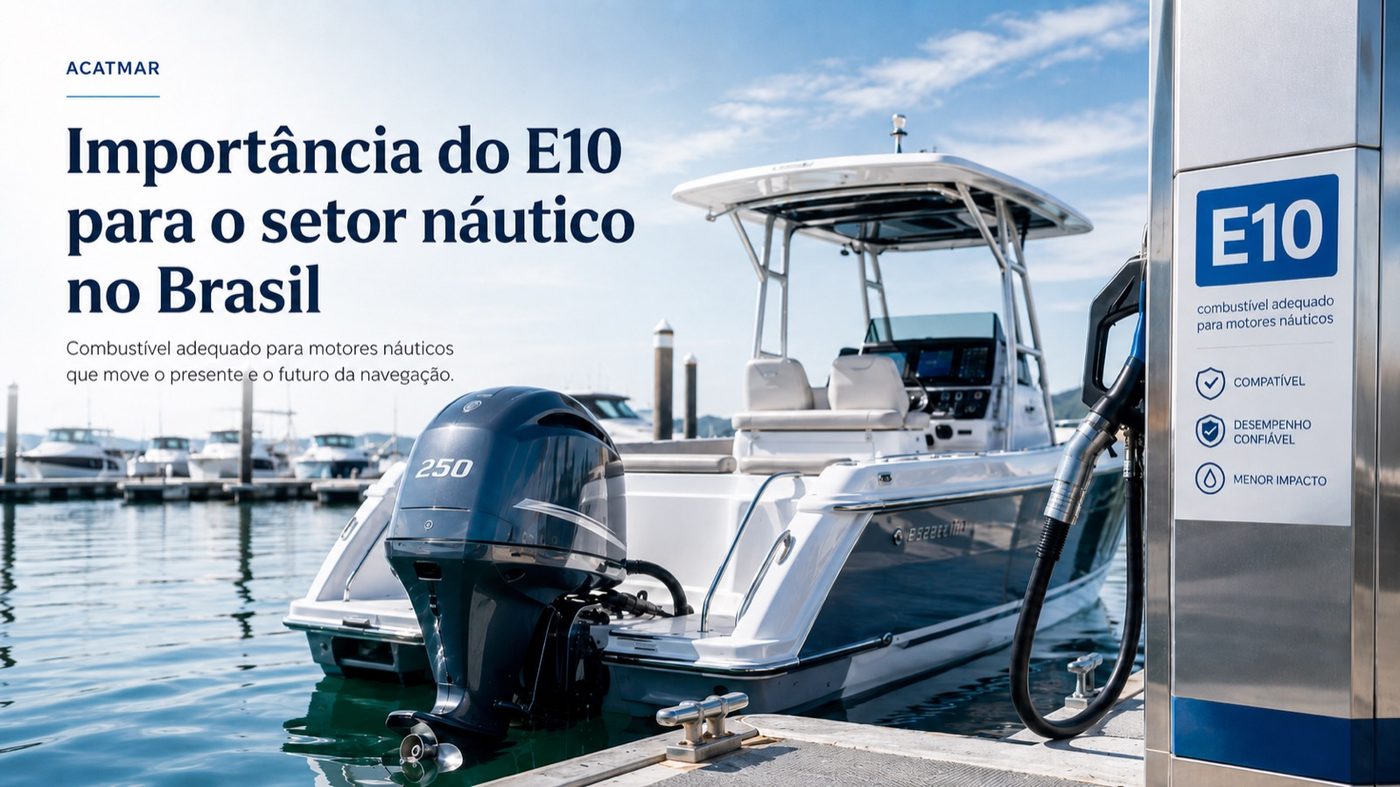
ACATMAR – the Brazilian Nautical Association calls on entrepreneurs, professionals, boat owners and the entire nautical community to take part in a national campaign for the availability of E10 gasoline at Brazilian fuel stations.
The Legislative Idea "Availability of Pure Gasoline and E10 Gasoline Throughout the National Territory" is open on the Federal Senate's e-Cidadania Portal. The proposal seeks to allow the additional and optional sale of gasoline with a fixed 10% ethanol content (known as E10) and of ethanol-free gasoline, without removing from the market or changing the mandatory blend currently adopted in the country.
As of the consultation on July 29, 2026, the initiative had already gathered more than 18,000 endorsements, approaching the 20,000 goal. When an idea reaches that number within the set deadline, it becomes a Legislative Suggestion and is analyzed and debated by senators. The deadline indicated by the portal ends on November 19, 2026.
Why does this matter so much to the nautical sector?
Currently, regular gasoline sold at Brazilian stations contains 30% anhydrous ethanol, while premium gasoline contains 25%. Ethanol-free gasoline is produced and moved through the distribution chain, but it is not sold directly to consumers at conventional stations.
The challenge is that a significant share of marine engines, personal watercraft, generators and other nautical equipment was designed to run on gasoline containing at most 10% ethanol.
Mercury Marine states that its current gasoline engines were developed to operate with fuel containing up to 10% ethanol. Yamaha advises that E15 or E85 fuels should not be used in its outboard engines. Sea-Doo also recommends gasoline with at most 10% ethanol and points to a preference for ethanol-free gasoline, especially during storage periods or in high-humidity environments.
The reality of boats differs from that of cars. Boats often remain unused for long periods, have larger tanks and are continuously exposed to humidity. Ethanol absorbs water and, depending on storage conditions, phase separation can occur, when water and ethanol build up at the bottom of the tank.
There can also be compatibility problems with hoses, seals, plastic components, old tanks and fuel systems not developed for high alcohol content. Yamaha itself highlights that a humid environment, longer storage time and the presence of old tanks make boats more sensitive to the effects of ethanol fuel.
Impacts on the entire production chain
The absence of a compatible fuel option affects not only the boat owner. The problem reaches marinas, dry-stack facilities, workshops, mechanics, tourism companies, rental firms, nautical schools, fishers, service providers and manufacturers.
Possible impacts include: greater maintenance needs; premature deterioration of components; starting difficulties and malfunctions; risk of losing the warranty when the fuel used goes against the manufacturer's guidance; insecurity for older or imported boats; and higher operating costs for nautical companies.
Compatibility should always be checked in each engine's manual, considering model and year of manufacture. However, when major manufacturers set a 10% ethanol limit, it becomes necessary for the Brazilian consumer to have access to a suitable alternative.
A technical choice, without environmental setback
Defending E10 gasoline does not mean opposing ethanol, biofuels or Brazil's energy transition. The increase of the blend to E30 was established by the National Energy Policy Council and came into force in August 2025, within the national policy of decarbonization and energy security.
What the nautical sector requests is an additional alternative for engines, boats and equipment that have their own technical specifications. Allowing the supply of E10 and ethanol-free gasoline, clearly identified at the pumps, would let consumers choose the fuel recommended by the manufacturer, without eliminating the gasoline currently sold and without compromising the national biofuels policy.
For ACATMAR, sustainable development also means ensuring safety, equipment durability, reduced waste and adequate conditions for those who work and invest in the Sea Economy.
Take part in the campaign
The consultation is open and the participation of the nautical chain is essential for the topic to reach the Federal Senate and be discussed in a technical, responsible and transparent way. Visit the e-Cidadania Portal, register your support and share it with entrepreneurs, professionals and boat users. The nautical sector needs to take part in decisions that directly affect its safety, its equipment and its ability to generate jobs and income.
Technical note: the original text of the Legislative Idea published on the Senate portal mentions E32 gasoline. However, according to the ANP's updated official information, the current blend is 30% ethanol in regular gasoline and 25% in premium gasoline. That is why ACATMAR's article uses the official percentages.