Itajaí's boat exports grow 93% and reinforce the strength of the Blue Economy
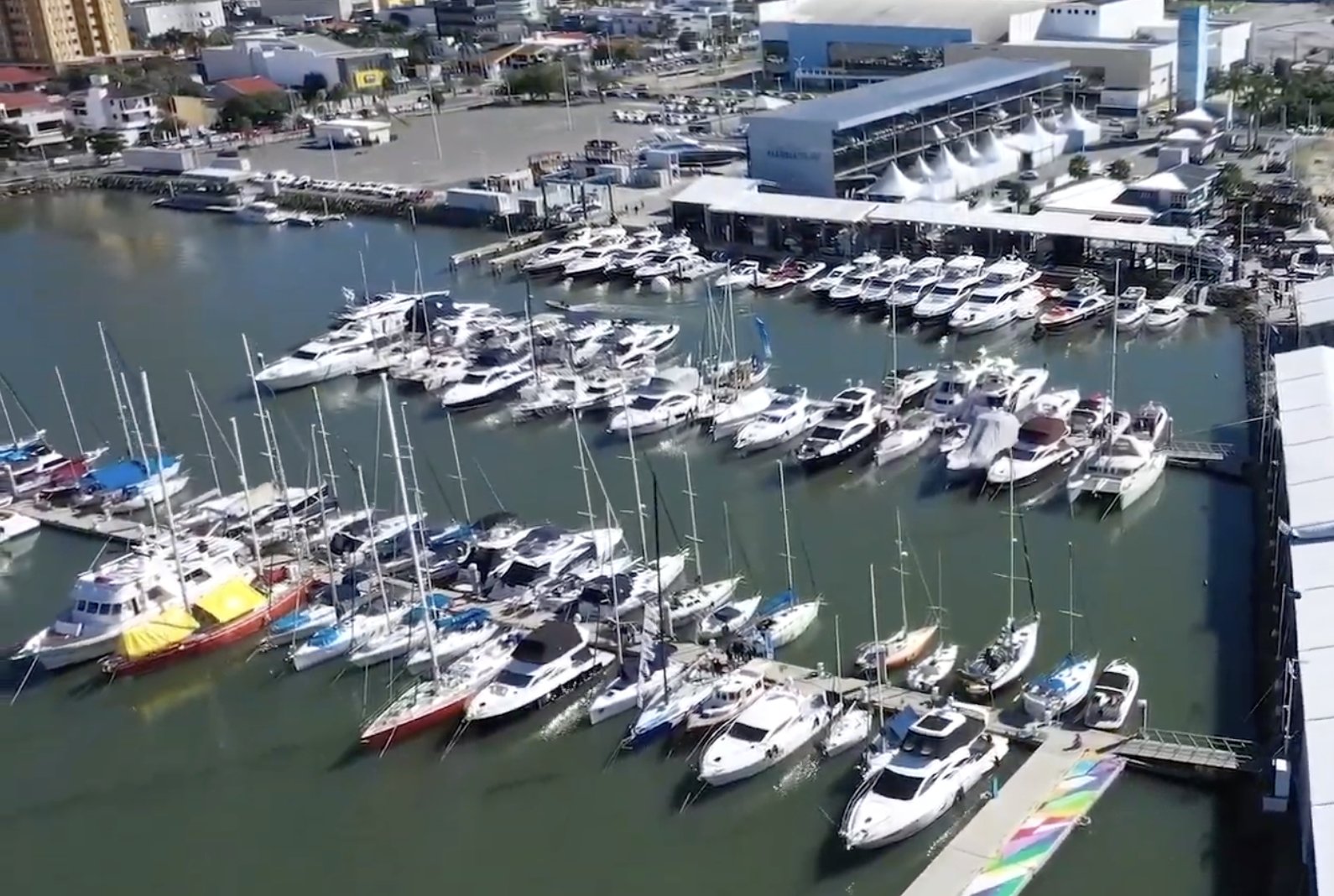
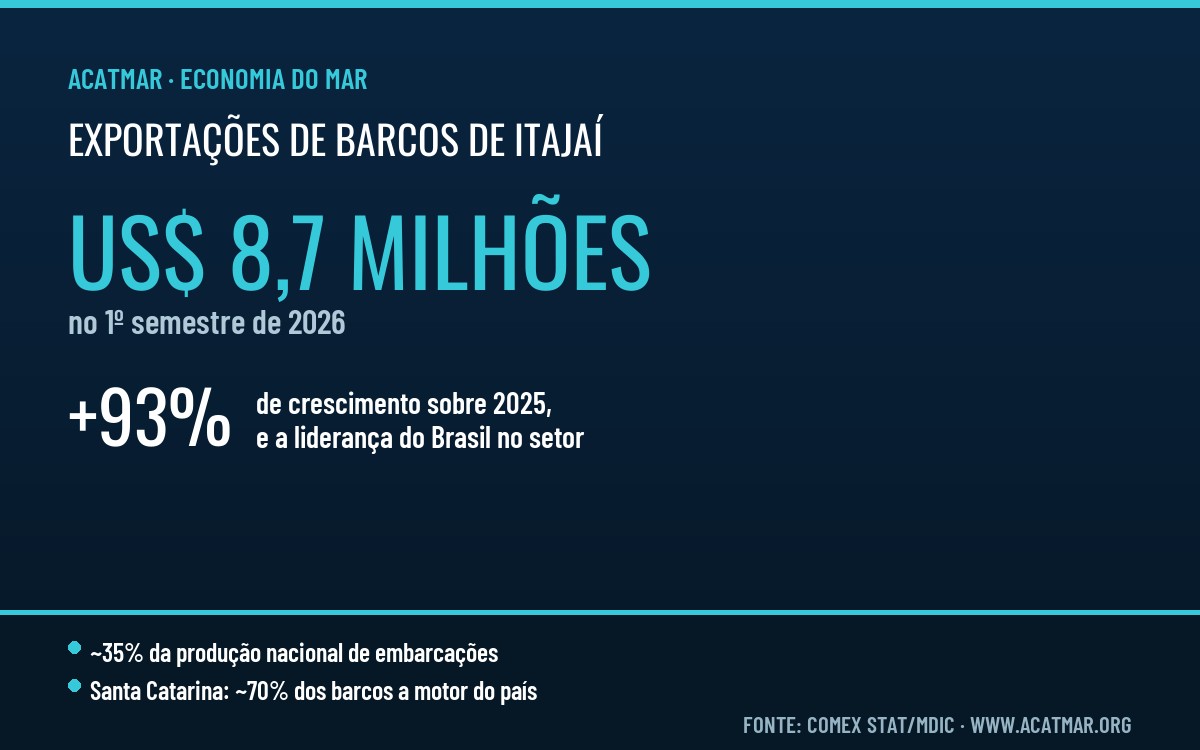
Brazil's nautical sector keeps expanding its share of the international market. In the first half of 2026, companies based in Itajaí exported US$ 8.7 million in yachts and other sport and leisure vessels, a 93% increase compared with the US$ 4.5 million recorded in the same period of 2025. The city led Brazil's exports in the segment.
The foreign-trade figures show an important advance, but reveal something even bigger: the economic dimension behind every vessel produced. For ACATMAR, understanding the nautical sector only by the number of boats built or sold is to see just one part of a much broader production chain.
An industry that moves different sectors of the economy
Before a vessel reaches the water, an extensive economic chain has already been mobilized. Design and engineering, shipbuilding, composites, resins, joinery, upholstery, glass, electrical systems, engines, onboard electronics, navigation and safety equipment, painting, finishing, accessories, transport and logistics are just some of the activities involved in production.
After delivery, another economic cycle begins. Marinas and dry stacks, maintenance, mechanics, fueling, insurance, parts and equipment trade, specialized services, professional training and nautical tourism become part of that vessel's working life.
The boat is the visible end product of a much larger economic chain. That is why nautical development must be understood within a broad view of the Blue Economy, especially when it comes to generating jobs, income, innovation and economic development.
Itajaí holds a strategic position in national production
Over recent years, Itajaí has built an important boatbuilding ecosystem, bringing together major shipyards, suppliers, service providers and specialized professionals. Today, the city accounts for about 35% of national vessel production, which puts it at the head of the sector in the country.
Santa Catarina, in turn, accounts for about 70% of Brazil's motorboat production, placing the state at the center of a chain that serves both the domestic market and international buyers. More than a concentration of shipyards, this environment fosters the development of suppliers, technology, technical knowledge and specialized services.
Rising imports also reveal an expanding industry
Another indicator helps to understand the sector's moment. In the first half of 2026, Brazilian imports linked to the construction of sport and leisure vessels reached US$ 75.6 million, up 23% from the US$ 61.5 million in the same period of 2025. Engines, electronic systems, radars, stabilizers, resins, components and finishing materials are among the products in this chain.
The trend shows an increasingly technological industry, integrated into global supply chains. At the same time, it opens an important discussion about opportunities to develop national suppliers, technological innovation and new business within the country itself.
To export is to add value
When a vessel built in Brazil is sold abroad, the country is not exporting just a product. It exports engineering, design, technology, knowledge, skilled labor and industrial capacity. It is this added value that makes the nautical sector so relevant to an economic development strategy.
The 93% growth in Itajaí's exports in a single year shows that there is an international market for Brazilian production and reinforces the need to create conditions for this activity to keep advancing.
Growth requires structure
The sector's progress also brings new challenges. Adequate nautical infrastructure, professional training and qualification, legal certainty, innovation, sustainability, access to technology, an investment-friendly environment and public policies aligned with the activity's characteristics are essential to sustain this growth. These are topics ACATMAR has been placing at the center of the debate on the development of the nautical sector and the Blue Economy.
"Every boat that leaves Itajaí carries with it hundreds of jobs, dozens of suppliers and a great deal of Brazilian technology. To export a vessel is to export knowledge and skilled labor. That is why we defend that the nautical sector be treated as what it is: a strategic industry of the Blue Economy," says Mané Ferrari, president of ACATMAR.
The US$ 8.7 million exported by Itajaí in the first half of 2026 are, therefore, much more than a foreign-trade figure. They represent a chain that produces, employs, buys, sells, develops technology, drives services and takes high-value Brazilian products to the international market.
The nautical sector is industry. It is services. It is technology. It is jobs. It is exports. It is the Blue Economy.
Foreign-trade data: Comex Stat/MDIC.