205 tonnes taken from the sea in 12 years: why Limpeza dos Mares matters to the nautical sector
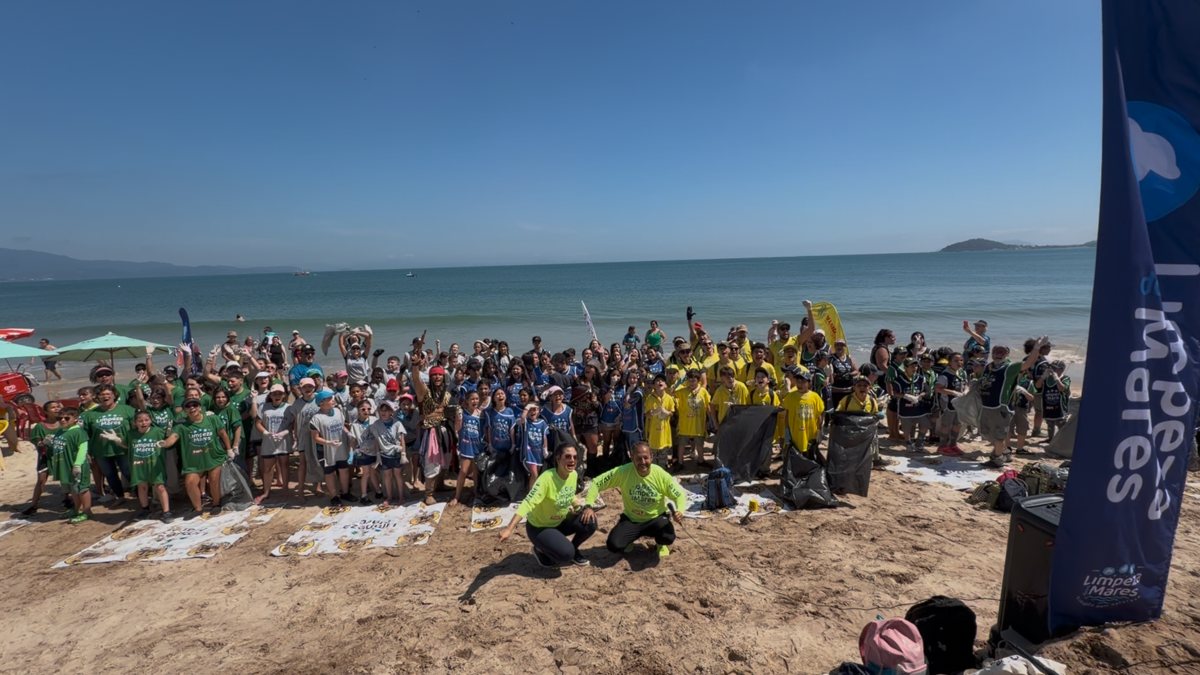
Limpeza dos Mares closed another edition of its annual cycle of environmental education talks in September, reaching more than 5,000 students in about 20 public and private schools in Greater Florianópolis. The work was featured in the Santa Catarina press this week and, more than a balance sheet, it opens a busy agenda through the summer.
In 12 years, the project created by ACATMAR, the Brazilian Nautical Association, has removed 205 tonnes of waste from the seabed across 54 different stages, with more than 5,000 volunteers taking part. It is one of the most consistent aquatic cleanup programs in the country, and it stands out precisely because it does not stop at collecting litter.
The agenda through the summer
The next action takes place on Saturday, September 19, marking World Cleanup Day on the 20th. In Porto Belo, divers will remove waste from the seabed at Caixa D'Aço beach.
In early October, project representatives travel to the Genoa Boat Show in Italy for an exchange with Assonautica Italiana. Italian-language editions of the Turma do Limpeza dos Mares comic will be handed out there.
November brings the Limpeza dos Mares Olympics, reaching their third edition in 2026. The event is scheduled for November 28 in Jurerê, Florianópolis, and should gather hundreds of students from across the state.
Also from November, the Limpeza dos Mares Blitz begins, approaching boats with awareness campaigns about improper waste disposal at sea. The action runs until Carnival. On December 12, the summer projects open.
Why this matters to the nautical sector
Environmental education is often treated as a side topic, running parallel to business. In the nautical sector it is not like that. Clean water is the raw material of the activity, and that shows up in everyone's accounts.
Marinas, shipyards, dealers, sailing schools, tour operators, service providers, fishers and divers all depend on the same water. When water quality drops, the trip loses value, the destination loses demand and the boat loses appeal. No investment in a marina or a boat holds up on a dirty shoreline.
There is also the practical effect anyone who navigates knows: submerged waste means damage risk. Bags and ropes tangled in the propeller, plastic in the engine's water intake and floating material in the access channel mean breakdowns, towing and repairs. Every tonne removed from the seabed is also maintenance avoided.
Add to that the legitimate pressure for environmental responsibility. Licensing, certifications, programs such as the Blue Flag and the demands of investors and international clients call for proof of commitment, not speeches. A project with 12 years on the road, 54 stages and auditable numbers is that kind of proof.
And there is the side that pays off more slowly, yet more deeply: building an audience. The child who understands today why litter cannot go into the river is the one who, ten years from now, will charter a boat, work at a marina or buy a first vessel. Brazil's nautical sector needs new people, and new people arrive through affection for the sea.
"We hear children saying: I saw my grandmother throwing litter in the wrong place and I explained the right way to her," says Leandro "Mané" Ferrari, president of ACATMAR, noting that the project's reach goes from the classroom into homes. He also celebrates the greater participation of parents in the activities.
From the beach to the boat
The Limpeza dos Mares Blitz shows that logic applied to the daily life of those who use the sea. Instead of speaking only to schools, the team goes to the boat.
"We hand out kits with household utensils made from recycled waste taken from the sea, and we also hand out educational booklets," explains Mané Ferrari.
It is awareness work done where the problem happens, with the people who can solve it. For the sector, it is the difference between complaining about litter at sea and working so it never gets there.
An agenda that runs across the sector
ACATMAR sees the Sea Economy as a chain running from the shipyard to tourism, through industry, retail, services, fishing and professional training. Preserving the environment that sustains that chain is not an isolated social action, it is a condition for the chain to keep existing.
That is why Limpeza dos Mares is not only the association's environmental project. It is part of the same agenda that discusses regulation, workforce training, nautical infrastructure and competitiveness. A dirty sea is a loss, and a clean sea is business.
About Limpeza dos Mares
Limpeza dos Mares is a social and environmental project dedicated to preserving aquatic environments. It combines the removal of waste from rivers, beaches and the sea with permanent environmental education and awareness work. Beyond the cleanup drives, the project highlights the so-called "litter no one sees": submerged, hard-to-reach waste that builds up underwater and directly affects ecosystems and marine life.