Alert to the sector: cloned card scam targets nautical stores in Santa Catarina
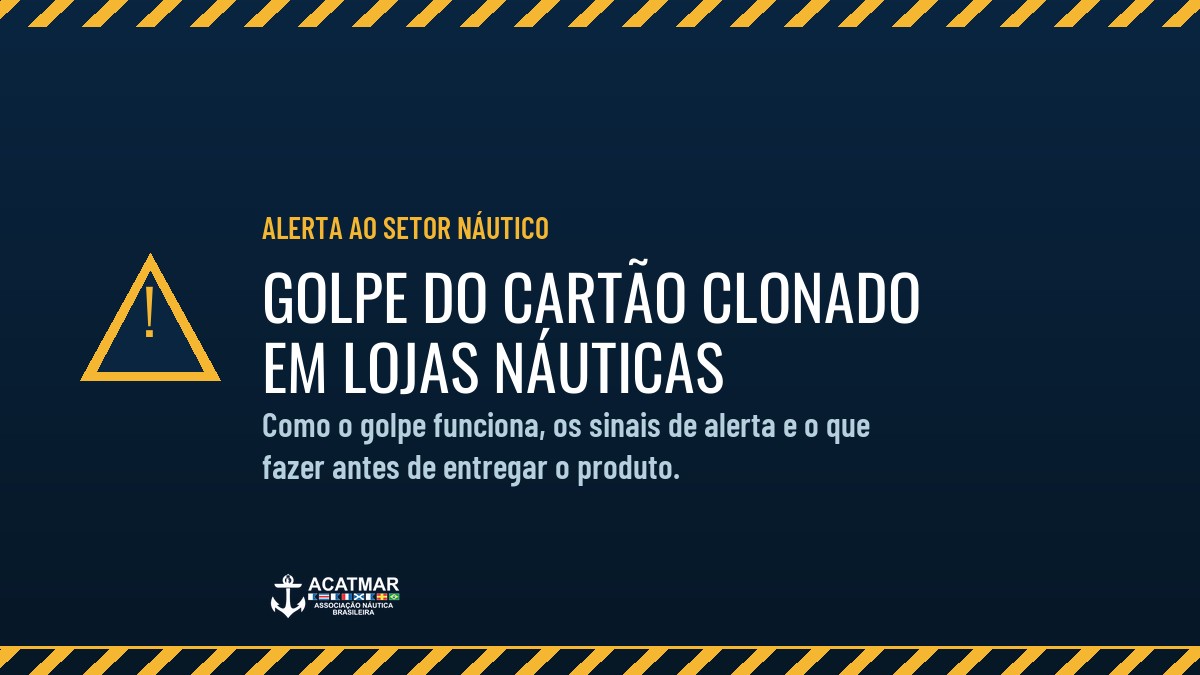
On the afternoon of Monday, September 14, three men arrived in two vehicles at a nautical equipment store in downtown Itajaí to pick up an outboard engine worth R$ 9,300 bought online. The team at the store, Catarina Náutica, an ACATMAR member, noticed that the payment confirmation steps had not been completed and that the trio had shown up anyway to take the product. They pressed the panic button and called the Military Police. The three fled before the patrol arrived.
The store contacted the holder of the card used in the purchase. She was abroad with her husband and confirmed she had not made the purchase. A police report was filed with the Military Police, which searched the area and did not find the suspects. According to what the force told the store, there are records of similar attempts against businesses in the nautical sector, including in Balneário Camboriú.
"It was a very tense day, with a feeling of insecurity. The three of them wore caps and kept their heads down. They wanted the product fast," said Roberto, from Catarina Náutica, to fellow ACATMAR members.
What saved the store was the procedure
The case did not end in loss for a simple reason: the company has a rule and made no exception. Purchases must be made through the website and go through every authorization step with the payment operator, and the store does not send payment links to customers. Until confirmation arrives, the product does not leave.
That is the point ACATMAR wants to reinforce with the entire network of stores, shipyards, marinas and service providers. Cloned card fraud is not fought at the moment of delivery, but in the company's sales policy. Those who have a written rule, and follow it even under pressure, do not lose the product.
The warning signs
From the member's account and the pattern being seen in the sector, some signs deserve extra attention at the counter:
Unusual rush to collect the goods, especially on purchases made online minutes or hours earlier.
A buyer who comes to collect but is not the cardholder, presenting himself as a representative, driver or employee of the boat owner.
A claim that payment "has already been made" without the operator having confirmed the transaction.
Phone calls made in front of the salesperson, as if to the boat owner, to lend credibility to the pickup.
Interest in high-liquidity, easy-to-resell items such as outboard engines, onboard electronics and antifouling paint.
Volumes far above normal consumption, such as an amount of paint well beyond what a single boat needs.
Reluctance to show identification or to wait for verification.
A vehicle parked at the door, with someone at the wheel, waiting for a quick exit.
The procedure ACATMAR recommends
Release the product only after final confirmation from the payment operator or intermediary, with no exception for a customer in a hurry.
Do not send payment links by message and keep online sales on the company's own website.
Check the identification of whoever collects the goods and record the ownership of the payment method.
On high-value purchases made by third parties, confirm with the cardholder through your own channel, not the phone number the buyer offers.
Keep cameras working, the panic button within reach and the team instructed never to confront anyone.
File a police report even when the attempt fails, because it is the record that connects cases and lets the police identify the pattern.
Inform ACATMAR and the retail network, so the alert reaches other companies in the sector quickly.
The other side of the problem: the buyer
Goods obtained through fraud do not sit still. They are usually offered soon afterwards, below market price, to marinas, sailors, service providers and owners. That is where the problem stops being only the retailer's and becomes the whole sector's.
Anyone who buys goods knowing, or who should know, that they have a criminal origin is liable for receiving stolen goods under article 180 of the Brazilian Criminal Code. And there is the technical risk, which at sea is no detail: material without an invoice and without traceability has no warranty, no proven origin and may have been stored any which way. With antifouling paint, safety equipment and onboard electronics, that comes at a high price later.
ACATMAR's advice to buyers is simple: demand an invoice, buy from authorized dealers and be suspicious of offers far below the going price, especially those that arrive by message, with no store and no warranty.
ACATMAR's position
"This case ended well because the retailer had a procedure and kept his cool. But the lesson is for everyone: the nautical sector has become a target, and the fight starts inside the company, with a clear sales rule and a team that does not give in to the buyer's rush. It also applies to the other side of the counter. When someone buys material that is far too cheap, with no invoice and no origin, they are financing this kind of crime and putting their own boat at risk. A serious sector protects itself together," says Leandro "Mané" Ferrari, president of ACATMAR.
ACATMAR asks member companies to report cases and attempts to the association, so the alert can be passed on to the network, and to take every episode to the police. Images and identification details obtained by companies should be handed to the authorities, who are the ones able to investigate and identify those responsible.