Law 20,050/2026: what the ZENAs, Santa Catarina's new Special Nautical Development Zones, really are
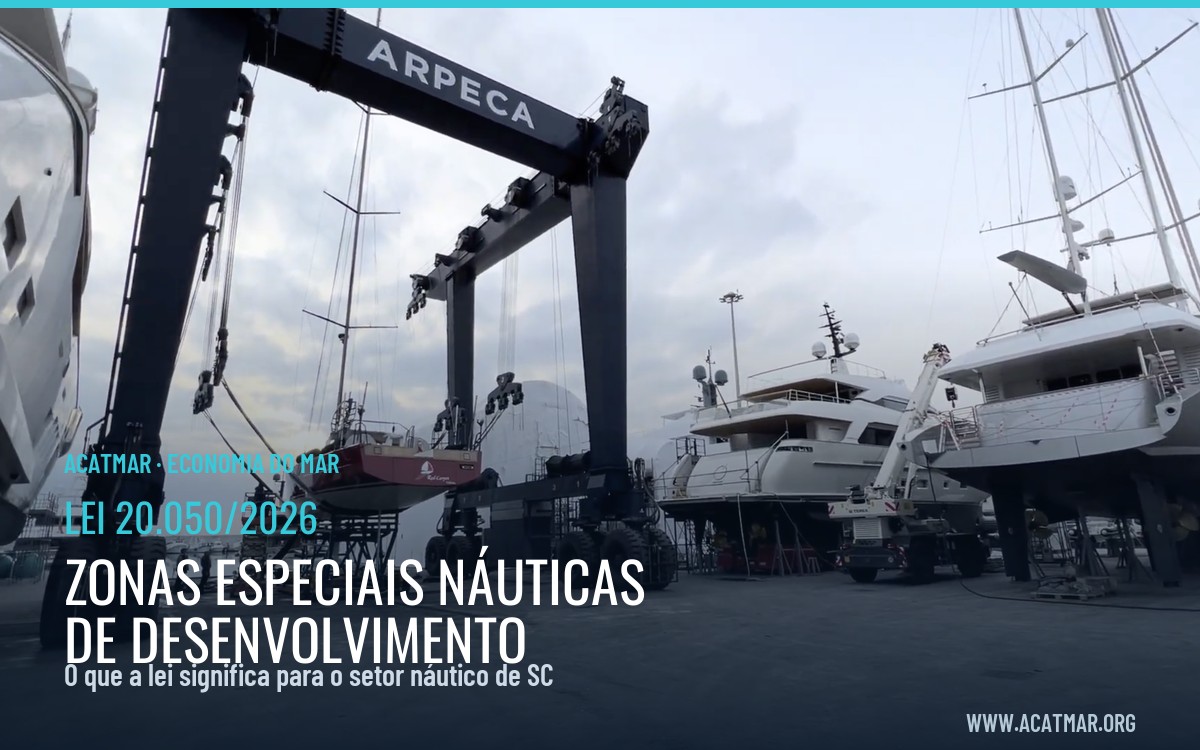
Every time a new law shows up full of acronyms, plenty of doubts come with it. The ZENAs are no different. That is why ACATMAR decided to use this space to explain, calmly and with examples, what Law 20,050/2026 really changes for the nautical sector and for the blue economy of Santa Catarina.
The report by the Santa Catarina State Legislative Assembly on the new law, in the video above, features ACATMAR's president, Leandro "Mané" Ferrari, and NavalCare's CEO, Marcelo Reis, a naval engineer and ACATMAR member, explaining what changes in practice for those who build, maintain and operate boats in the state.
What we are talking about
Law 20,050/2026 came from Bill 485/2026, approved by the Legislative Assembly of Santa Catarina on July 15 and sanctioned on July 29, 2026. It creates the State Policy for Special Nautical Development Zones, the ZENAs. The goal, according to the law itself, is to boost the blue economy by encouraging investment, technological innovation and the integration of nautical, port, industrial, logistics and tourism activities.
What a ZENA is, in plain words
Think of a ZENA as a planned district of the sea. It is an organized area, under private governance, created to bring together in one territory the infrastructure of those who work with boating. That includes vessel construction and repair, nautical equipment manufacturing, navigation technology development, marinas, private port infrastructure and research and innovation centers.
Instead of each company setting up on its own, far from the others and dealing with scattered rules, the ZENA proposes to concentrate and organize all of this in a place designed for the sector to grow.
A practical example
Imagine a single hub bringing together a shipyard, a marina, the suppliers of stainless steel, engines, resins and electronics, a technical school and a research center. The shipyard has the workforce and suppliers nearby; the marina attracts nautical tourism; the school trains those who will work there; and the research center develops the solutions the market needs. A boat, which today depends on dozens of companies scattered across the state, starts to find much of the production chain at the same address. It is this logic of organization that the law wants to encourage.
An example that already exists in the world: Viareggio
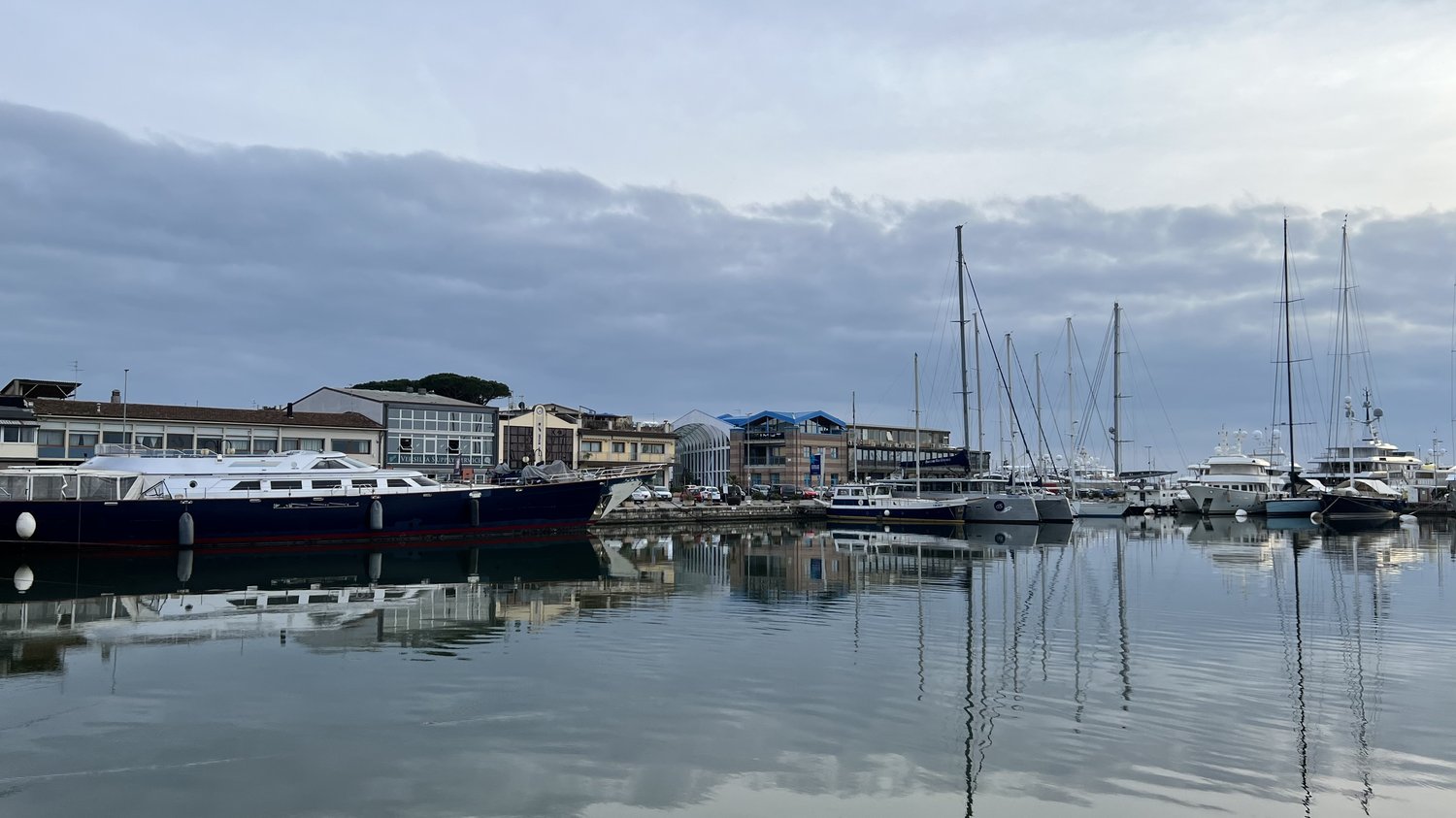 Viareggio nautical hub, Italy · Photo: ACATMAR
To understand where this kind of organization can lead, it is worth looking abroad. Viareggio, in the Tuscany region of Italy, is one of the largest nautical hubs in the world. In a single territory, the city concentrates shipyards, refit and repair companies, hundreds of specialized suppliers, marinas and a highly skilled workforce, all side by side.
It did not happen overnight. The tradition of wooden shipbuilding shaped, over more than a century, generations of masters and professionals who today make Viareggio a global reference. Major shipyards, such as Benetti, founded there back in the 19th century, coexist with dozens of other companies, and the city has become one of the main centers for building large vessels on the planet. Italy is estimated to account for close to half of the large yachts built in the world, with Viareggio at the heart of that story.
ACATMAR knows this hub closely, and the photo above is from the association's own archive. What Viareggio shows is exactly the logic of the ZENAs: when the nautical sector organizes itself in one space, with an integrated production chain, training and services, it generates skilled jobs, attracts investment and becomes an engine of development for the city and the region. It is this path, adapted to our reality, that Santa Catarina can follow.
What changes in nautical planning
Today, nautical activities compete for space along the coast with many other uses and live with rules spread across different agencies. This creates insecurity for those who want to invest, because it is not always clear where and how the sector can set up and grow.
The law creates a tool to plan and organize these areas. To organize means to reduce conflicts of use, provide predictability and bring legal certainty to investment. And it does so without overriding anyone: the law preserves federal, state and municipal powers, keeps environmental licensing and keeps urban planning authorizations. In other words, the municipality still decides over its territory and environmental agencies still have the say over the environment.
What the law does NOT do (demystifying it for good)
This is where the biggest misunderstandings live. So, point by point:
It does not privatize the sea or the beaches. The ZENA organizes nautical enterprises in defined areas. It does not hand the sea or the shoreline to anyone.
It does not waive environmental licensing. Every enterprise is still required to meet environmental requirements.
It does not waive urban planning authorizations. Municipal land use and occupation rules remain in force.
It does not create a special tax, port or customs regime. A ZENA is not a free-trade zone. There is no tax exemption and no port regime of its own.
What the law actually delivers
The concrete gain is priority. Enterprises located in ZENAs gain preference in accessing state development and innovation programs. The law also requires the adoption of sustainability and governance practices. And it delivers something strategic: it recognizes the blue economy as a state development policy, with an organized path to grow.
Why this generates jobs and income
Organization and priority attract investment, and in the nautical sector investment quickly turns into jobs. Santa Catarina is already Brazil's leading nautical production base and accounts for about 68% of Brazil's exports of leisure boats. Each medium and large vessel generates, on average, four direct jobs and another eight indirect ones, which shows how the activity spreads across the whole economy. These figures were compiled by ACATMAR from surveys of the Santa Catarina sector.
When you create an organized environment with priority for funding, the tendency is to expand production, attract new companies and, with that, open more jobs and demand more qualification. It is a cycle ACATMAR has defended for years.
What municipalities and the state gain
More nautical activity means more formal jobs and more income circulating in the city, because the sector drives hospitality, dining, transport, retail and a broad chain of services. It also means more nautical tourism, the renewal of previously underused areas and the retention of skilled labor, which starts to find work close to home. For the state, it is a stronger, more diversified economic base, sustained by a sector that keeps growing.
What is still to come
Like any new policy, the ZENAs will still go through regulation, which will detail the criteria for creating and recognizing these zones, their governance and their integration with municipal master plans. ACATMAR will follow this process closely and keep informing the sector.
"The law recognizes what we live every day: the blue economy is industry, trade, services and tourism, and it needs organized space to grow. Organizing nautical areas gives confidence to invest, and investment turns into jobs and income for the cities," says Mané Ferrari, president of ACATMAR.
With information from the Legislative Assembly of Santa Catarina (ALESC). Law 20,050/2026 originated from Bill 485/2026, approved on July 15 and sanctioned on July 29, 2026.